


Monster Math: Games For Kids
Makkajai: Math Games for 1st, 2nd, 3rd, 4th grade
I found Monster Math: Games For Kids to be a friendly way to turn short arithmetic practice into something that feels more like play than a worksheet. It is an educational game from Makkajai: Math Games for 1st, 2nd, 3rd, 4th grade, aimed at children who are building confidence with basic math facts. The central idea is simple: give a child repeated practice in a more inviting setting, then let that practice gradually become familiar.
That distinction matters. This is not the sort of app I would choose when I need a complete replacement for a teacher, a detailed math course, or a tool for advanced problem solving. I see it as a practice companion for early learners, especially when a child understands a method but still needs regular repetition to answer more comfortably. In my experience, that narrow purpose is also its strongest quality.
What to expect before the first game
The app is free to start, and its Everyone age rating makes it suitable for a broad family audience. Optional in-app purchases range from $7.99 to $59.99 per item, so I would treat the free starting point as a chance to test the fit before considering any purchase. That is particularly sensible with children, because the right question is not simply whether the game looks colorful, but whether the practice style matches the child’s current level and attention span.
Its store summary focuses on math facts fluency for grades one through three, while the developer name also references the first four grades. I would therefore approach it as an early-elementary practice game rather than assume it will serve every child in exactly the same way. A younger learner may benefit from the repetition, while an older child who is already comfortable with basic facts may find the work too easy unless the available activities provide enough challenge.
The app has earned a 4.7 average from around 1.6 thousand ratings, with over 100 thousand installs. Those figures suggest that many families have found the general approach useful, but they do not remove the need to watch how one particular child responds. Some children enjoy game-like repetition immediately; others become more focused when they can write solutions, use physical counters, or work directly with a parent.
Related News






I would also set expectations about the learning result. A child may become quicker at familiar facts through repeated play, but speed should not be the only goal. If an answer is guessed, tapped randomly, or remembered without understanding, a high score can give a misleading impression of progress. I get the best value from this kind of app when I use it alongside a quick conversation: “How did you work that out?”
Choosing the right moment to begin
For a first session, I would avoid introducing the game during a rushed morning or immediately before bedtime. A short, calm trial gives the child room to understand the controls and lets me see whether the questions are comfortable, too simple, or frustrating. The most useful early sign is not excitement alone; it is whether the child can explain an answer after making it.
A realistic routine might be a few minutes after homework, while a parent is nearby preparing dinner. The child can attempt a small set of questions, and the adult can step in only when needed. That makes the game a manageable habit rather than another large assignment. If the child starts rushing simply to finish, I would stop and return later instead of treating completion as the main achievement.
Gallery
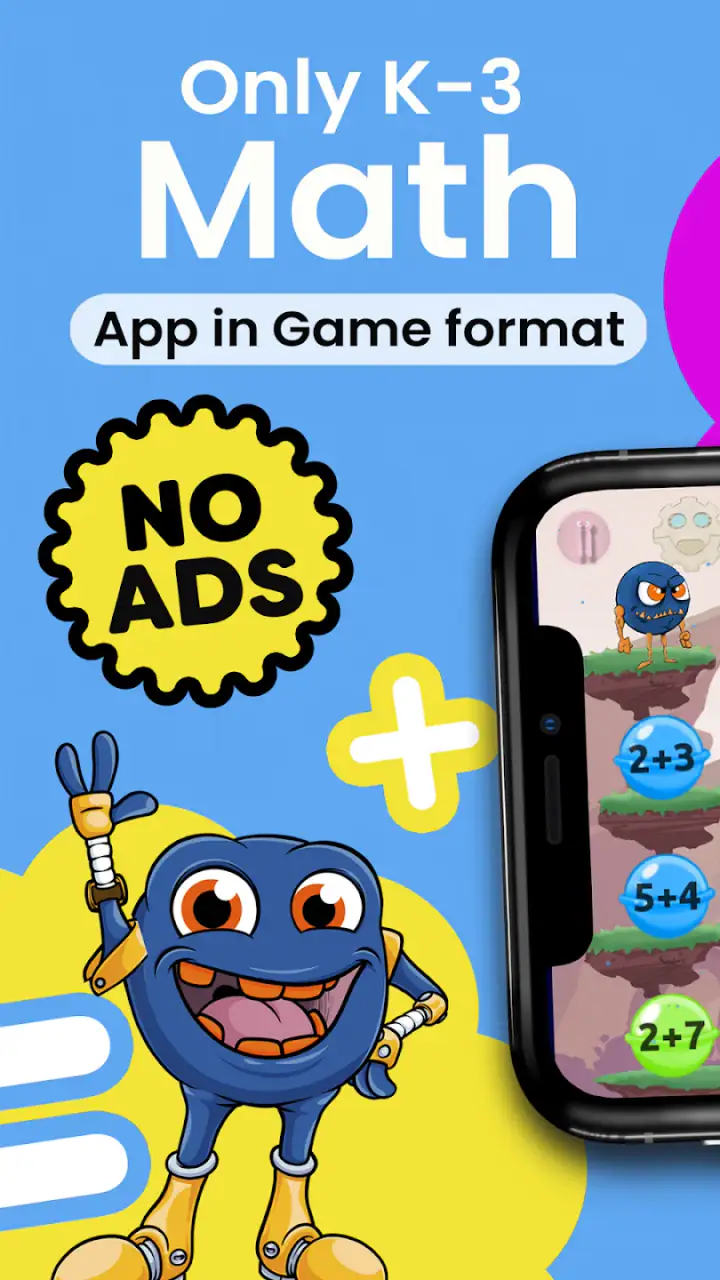
Setting it up without turning it into a chore
Because the minimum operating system is Android 9, I would check the device before planning around the app. On a compatible phone or tablet, I would begin by opening the game with the child present, rather than installing it and handing over the device without explanation. The first few minutes are a good opportunity to agree on what “success” means: careful answers, trying again after mistakes, and asking for help when a question is unclear.
I would also review the purchase controls before letting a child play independently. The game is free, but the presence of optional paid items means an adult should manage purchasing decisions. I would not frame those options as necessary for learning. First I would see whether the free experience supports the child’s needs, whether the sessions remain comfortable, and whether the app is actually being used consistently.
One useful setup habit is to keep a small paper and pencil nearby. Even if the game is designed for quick answers, writing a number sentence can reveal why a child is struggling. For example, a child who hesitates over a subtraction fact may need to break the number apart, while a child who answers correctly but cannot explain the step may need more hands-on practice away from the screen.
Finding the first meaningful success
The first meaningful success should be more than reaching the end of a round. I would look for the moment when the child solves a familiar fact, notices the result, and can describe the thinking behind it. If the child is working with addition, I might ask whether counting on, grouping, or recalling a known pair helped. That small explanation turns a tap into evidence of learning.
When a mistake appears, I would resist immediately giving the answer. Instead, I would ask the child to try a simpler related fact or use the paper beside the device. This is one of the most practical ways to use a game like this: let the app provide repetition and immediate practice, then let the adult provide the explanation when repetition alone is not enough.
I would keep the first session deliberately modest. A child who finishes wanting another short turn has probably had a better introduction than one who is pushed through a long session and ends up associating math with pressure. The game’s appeal comes from making practice approachable, so the adult’s role is to protect that feeling without allowing random tapping to become the habit.
Where new users may become confused
The biggest possible confusion is mistaking a game response for a full lesson. A child may know that an answer is correct or incorrect without understanding the reason. If a question causes repeated errors, I would pause the game and teach the idea with objects, drawings, or spoken examples. The app can then become a place to rehearse the skill once the explanation makes sense.
Another common issue is level mismatch. If the questions feel effortless, the child may lose interest and simply tap through them. If they feel too difficult, the child may assume that being slow means being bad at math. I would watch the child’s behavior rather than rely only on the apparent score: hesitation, guessing, and frustration are useful signals that the practice needs adjusting or that another learning method would be better for the moment.
Parents may also wonder whether the game is suitable for independent use. I would say it can support some independence, but I would not make it completely unsupervised at the start. A child may need help reading a prompt, understanding an error, or deciding whether to keep trying. Once the routine is familiar, occasional check-ins can be enough, but I would still review progress through conversation rather than assuming that screen time equals mastery.
A further point is that “fluency” should not be confused with racing. Quick recall is useful, but accuracy and flexible thinking come first. If a child takes longer and uses a sound method, I would praise that process. The game works best when it builds comfort over time, not when it turns every question into a contest against the clock.
How I would use it during an ordinary week
I would give the app a specific job in the family routine. For instance, after a child finishes a small amount of schoolwork, I might offer a brief practice session focused on the facts that caused difficulty earlier. Afterward, I would ask the child to show one example on paper. This two-part workflow prevents the game from becoming isolated entertainment and creates a bridge between digital practice and ordinary classroom work.
Another useful approach is to alternate the app with non-screen activities. One day could involve the game, another could use cards, dice, counting objects, or a handwritten puzzle. If the child performs well only inside the app, that is a sign to transfer the same facts into a different setting. The goal is for the knowledge to remain available when the screen is gone.
I would be especially careful with children who become competitive. A playful format can motivate them, but it can also make mistakes feel public or embarrassing, even when no one else is watching. In that case, I would focus on personal improvement and explanations. A child who solves a problem carefully after previously avoiding it has made meaningful progress, even if the session does not produce a perfect run.
What makes it different from usual alternatives
The usual alternatives for early math practice are worksheets, flashcards, physical manipulatives, teacher-led exercises, and general educational videos. Each has a different strength. Worksheets make written thinking visible, flashcards are easy to control, manipulatives help with concrete understanding, and a teacher can respond to misconceptions. This game’s advantage is the low-friction repetition: it gives a child a more interactive reason to keep practicing familiar facts.
That advantage has a limit. A worksheet may show exactly where a child made a mistake, while a game can make the experience feel smoother without revealing the underlying confusion. Physical objects are often better when a child is still learning what addition or subtraction means. A teacher or parent is better when the child needs a new explanation. I would choose Monster Math as the engaging practice layer, not as the only layer.
It is also different from broad learning platforms that cover many school subjects. A focused math game can be easier to start because the child does not need to navigate a large curriculum. On the other hand, families wanting reading, science, writing, and math in one place may prefer a wider educational service. The narrower focus is valuable when arithmetic practice is the immediate need, but less useful when the family wants a complete learning environment.
Who will get the most from it
I think the best match is a child in the early elementary years who understands basic operations but needs regular practice to become more confident. It can also suit a reluctant learner who responds better to a game-like invitation than to another printed page. Families that want a short activity for travel, waiting rooms, or a calm after-school transition may find that format convenient.
I would be more cautious for a child who needs intensive support with number concepts, has difficulty reading the prompts, or becomes distressed by mistakes. That child may benefit more from direct adult guidance and concrete materials first. I would also skip it as a primary tool for children who are already working well beyond basic facts; a more advanced app, textbook, or teacher-led resource would probably provide better value.
The same applies to adults looking for detailed reporting or a carefully sequenced curriculum. I would not choose this solely because the rating is high or because the app has many installs. I would choose it when the child’s immediate need is enjoyable repetition and the adult is willing to notice when repetition is no longer enough.
My practical verdict after the first stage
Monster Math: Games For Kids succeeds when it is used with a clear, modest purpose: help a child practice early math facts often enough that the work starts to feel familiar. I like the approachable format, the free entry point, and the possibility of making a short practice session less intimidating. The developer, Makkajai: Math Games for 1st, 2nd, 3rd, 4th grade, has positioned it clearly as an educational game rather than a general entertainment title.
The current version is 369.1.7, and the app has been available since April 15, 2020. For someone deciding whether to try it now, the important question is not its age or version number by itself, but whether the experience fits the child’s present learning goal. I would install it on a compatible device, test a calm first session, and observe the child’s explanations as closely as the answers.
My recommendation is to use it as a guided practice tool, not a substitute for teaching. Start with a short session, keep pencil and paper nearby, and stop while the child still feels capable. If the app helps transform repeated arithmetic into a routine the child willingly returns to, it is doing something worthwhile. If the child needs concrete explanations, broader lessons, or more advanced mathematics, I would move to another resource rather than forcing this one to do a job it was not designed to handle.
For families who want that focused first step, the game is a sensible free trial. I would give it a place in the week, watch for genuine understanding, and let the child’s response determine what comes next. That approach makes the path from installation to a real learning win feel manageable, without pretending that a playful screen can replace the wider process of learning mathematics.
FAQs for Monster Math: Games For Kids
What is Monster Math: Games For Kids?
Monster Math: Games For Kids is an educational mathematics app designed to help children practice essential skills through colorful games, challenges, and interactive exercises. It typically covers topics such as counting, addition, subtraction, multiplication, division, and number comparisons, with difficulty levels that can be adjusted to match a child’s age and current ability. The game-based format makes practice feel less like traditional homework.
What age group is Monster Math suitable for?
The app is mainly intended for young learners in elementary school, although the most suitable age depends on the child’s mathematics level and the selected difficulty. Beginners can work on counting and basic arithmetic, while more advanced children may practice multiplication, division, and other concepts. Parents should review the available levels to confirm that the content matches their child’s needs.
Does Monster Math help children improve their math skills?
Monster Math can be a useful practice tool because it combines repetition with immediate feedback and short interactive activities. Children can reinforce calculation speed, number recognition, and basic problem-solving while progressing through game-style challenges. However, it should complement classroom instruction rather than replace it. Results will depend on regular use, the child’s age, and whether the selected exercises are appropriately challenging.
Is Monster Math safe and suitable for children?
The app is built around child-friendly educational gameplay, but parents should still check its current privacy details, advertisements, in-app purchase settings, and any external links before allowing independent use. Device parental controls are recommended, especially for younger children. It is also helpful for adults to supervise the first sessions and confirm that the app’s content and permissions are comfortable for their family.
Is Monster Math free to download and does it require an internet connection?
Availability, pricing, and included features may vary between Android and iOS versions, so users should check the relevant store listing before downloading. Some content may be available for free while additional lessons or features can require a purchase or subscription. Internet access may be needed for installation, updates, account features, or purchases, even if certain gameplay activities work offline afterward.
Pros
- Covers addition
- subtraction
- multiplication
- and division practice.
- Short challenges help maintain children’s attention during practice.
- Progress tracking makes it easier to monitor learning development.
- Suitable for independent play with simple
- child-friendly controls.
- Game-based rewards can make repeated practice feel more engaging.
Cons
- Many advanced activities may require a paid subscription.
- Some children may focus more on rewards than solving problems.
- Requires a compatible device and enough storage for installation.
- Younger children may need help navigating menus and settings.
- Practice content can feel repetitive after extended play sessions.


